Fan
Drive technology
1. AC fan
Features :
Mature technology, simple and reliable structure
Low initial investment cost
Single speed or simple speed adjustment
Suitable for scenarios with stable operating conditions and low energy efficiency requirements.
Performance : Maximum airflow up to 8,000 CFM, noise level 55-65 dB
2. EC DC brushless fan
Features :
High efficiency, significantly more energy-efficient than AC motors
0-10V/PWM stepless speed regulation, precise control
Can be integrated with building management systems (BMS)
Low noise operation (50-55 dB)
Suitable for variable air volume (VAV) systems
Performance : Maximum airflow 5,000 CFM
V. High-efficiency energy-saving technologies
1. Three-dimensional flow high-efficiency energy-saving technology
The three-dimensional flow impeller design with a spiral blade layout can improve operating efficiency by more than 85% and save more than 15% of electricity compared with traditional fans.
Examples of energy-saving benefits :
1600kW installed wind turbine: annual electricity savings of 1.71 million kWh, resulting in electricity cost savings of 1.026 million yuan.
Emission reduction effect: Saves approximately 513 tons of standard coal per year and reduces CO₂ emissions by approximately 1,491 tons per year.
2. Customized design
Based on a three-pronged evaluation strategy of "mathematical model calculation + fluid dynamics simulation + database analysis", a fully customized wind turbine solution is achieved to maximize operating efficiency.
VI. Key Points for Selection
1. Determine performance requirements
Step 1: Calculate the required air volume
Determined based on workshop volume × air changes per hour (ACH)
Step 2: Calculate the system static pressure
Summing up all sources of resistance: duct length, elbows, valves, HEPA filters, heat exchangers, etc.
Step 3: Reserve a safety margin
A margin of 10-15% should be reserved for air volume and air pressure.
Considering factors such as filter clogging and pipe aging
2. Considering operating conditions
Selection requirements | |
Flue gas temperature ≤80℃ | ordinary centrifugal fan |
Flue gas temperature 80-250℃ | Boiler induced draft fan |
Flue gas temperature ≥250℃ | High temperature fan |
High dust concentration | Wear-resistant treatment, radial straight blades |
corrosive gases | Corrosion-resistant materials (stainless steel, coating) |
3. Parallel/Series Operation
When multiple units are connected in parallel, select fans of the same model and performance.
The value should be between 0.80 and 0.95 (the higher value should be used if the pipeline layout is reasonable).
Inlet and outlet flue pipes are equipped with baffles to prevent airflow interference.
VII. Installation and Maintenance
Installation Points
Basic requirements : The surface must be level and stable; vibration damping devices must be installed for installation on floors.
Connection method : The air inlet and the duct use a flexible connection (such as a canvas joint) to reduce vibration transmission.
Space requirements : Ensure the air inlet is free of obstructions and the air outlet duct is unobstructed.
Transmission methods : A/D/F type direct drive, B/C/E type variable speed drive
Operating Procedures
Before starting : Check if the impeller is stuck, if the bearing is adequately lubricated, and close the air inlet regulating valve.
Start-up : Start the motor under no-load conditions, and gradually open the valves to the working state after the speed stabilizes.
During operation : Monitor bearing temperature (≤80℃) and regularly clean impeller dust.
Product Classification
Based on their structural form and working principle, industrial fans are mainly divided into the following two categories:
1. Centrifugal fan
Centrifugal fans generate centrifugal force through impeller rotation, drawing gas in axially and discharging it radially. They are suitable for high static pressure and medium to large air volume scenarios.
Main features :
It has a wide pressure range, meeting requirements from low pressure to ultra-high pressure.
The efficiency is relatively high, especially with the backward-curved blade design, which can achieve an efficiency of over 85%.
Stable operation and relatively low noise
Suitable for complex working conditions such as dusty gases and high-temperature gases.
Classification by blade type :
Blade type | Exit angle β2A | Features | Application scenarios |
Back-curved blades | <90° | High efficiency, energy saving, and large diameter | High-power, high-efficiency applications |
radial blades | =90° | Wear-resistant and corrosion-resistant | Dust-laden gases, corrosive environments |
Forward-curved blades | >90° | Small size, light weight, low price | Small flow rate, high pressure; low pressure, large flow rate |
2. Axial flow fan
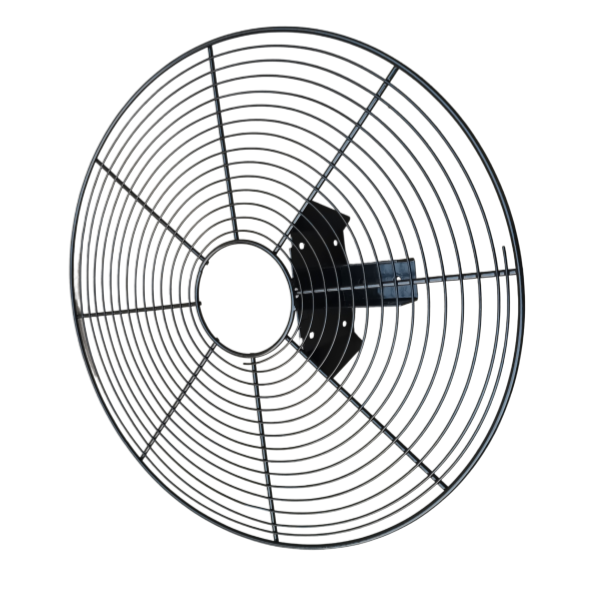
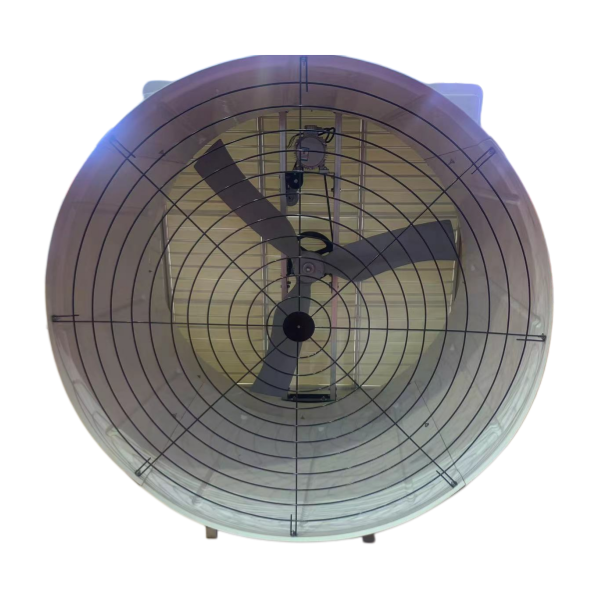
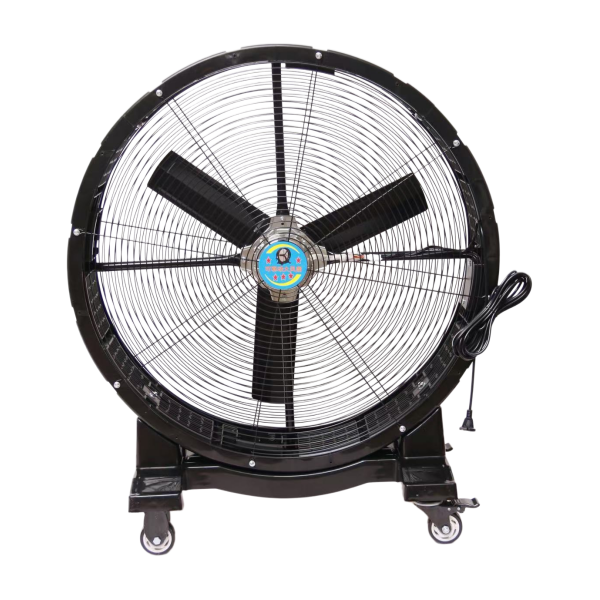
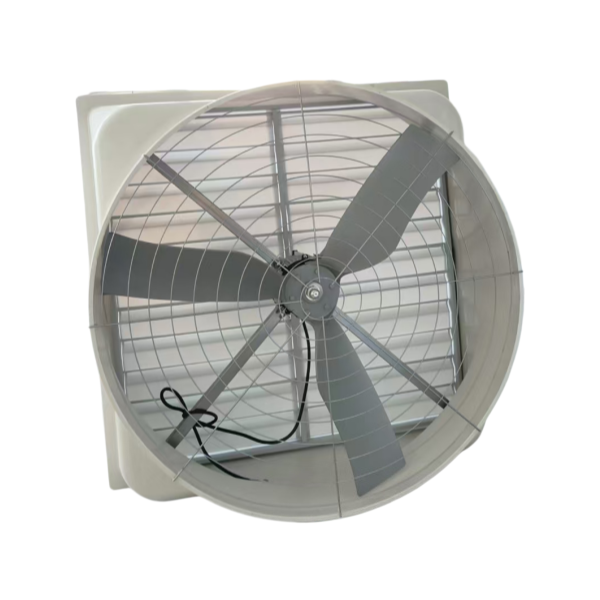
Axial flow fans allow gas to enter and exit along the axial direction, resulting in large air volume and low air pressure, making them suitable for high-flow, low-resistance systems.
Main features :
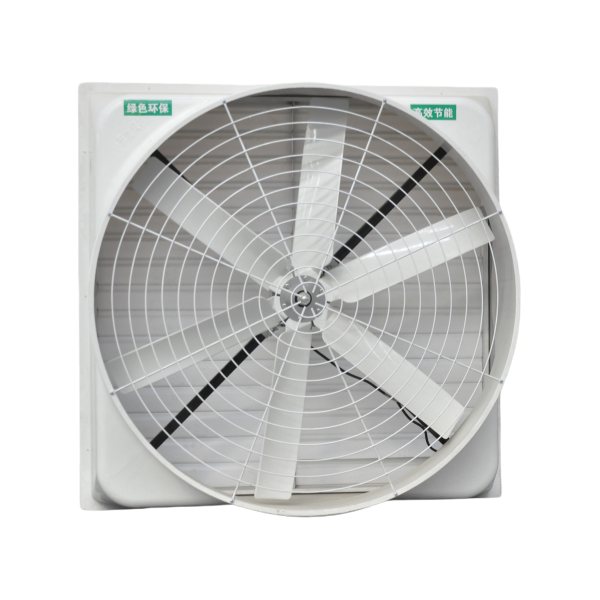
Large air volume and compact structure
The motor is integrated inside the impeller, resulting in a small axial dimension.
Suitable for installations with limited space
The noise level is relatively high.
Application Comparison :
Fan type | Air volume range | Pressure characteristics | Typical applications |
Centrifugal | China-Super | High static pressure | Piping systems, filters, cleanrooms |
Axial flow | Large - Extra Large | low static pressure | Factory ventilation, cooling towers, and equipment heat dissipation |
Industrial fans constitute one of the core pieces of equipment widely utilized in factories and enterprises, primarily serving functions such as ventilation, cooling, dust removal, material transport, and combustion support in industrial processes. Acting as the "heart" of industrial production systems, these fans circulate gases and materials throughout the entire system and are extensively applied across sectors including steel metallurgy, petrochemicals, electric power, mining, and cement and building materials. In terms of energy consumption, industrial fans account for over 30% of an enterprise's total electricity usage; consequently, the selection of high-efficiency, energy-saving fans is of paramount importance for reducing operational costs.